

On May 31, 2007 at 20:04 CST the moon will enter it’s full stage for the second time in a month. This is called a Blue Moon and occurs roughly once every 2½ years. ( In Europe and England, this will occur June 1, giving them a Blue Moon on June 30th)
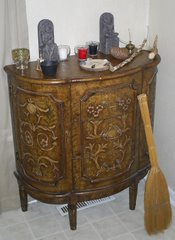
Full Moon Ritual
This is a VERY powerful ritual. I have had great results from this. If done correctly, the presence of the Lady can be strongly felt!
You will need:
Two white candles
A bell
Wine or lunar liquid
Your chalice (or cup)
Spell material if you are doing something afterwards
Cast your circle.
Stand before the altar facing North and say:
This is the time of the full moon, a time of great power for positive manifestation, a time of increasing and gaining.
The tide of Moon-power is strong.
I am of the Goddess.
I stand before You at Your altar, in love and adoration.
Be with me Goddess.
Let me feel your presence here tonight."
Go to the east with the bell.
Ring it once and say:
"Hail Selene. Help me feel the Lady's power and presence within my mind."
Go to the South.
Ring the bell once and say:
"Hail Cerridwen.
Help me feel the Lady's power and presence within my spirit."
Go to the West.
Ring the bell once and say:
"Hail Athene. Help me feel the Lady's power and presence within my emotions."
Go back to the North. Ring the bell once and say:
"Hail Aphrodite. Help me feel the Lady's power and presence in my body."
You will probably have an amazing wave of feelings come over you. Let them sink into your body and soul. When you are ready, return the bell to the altar, turn to the North, and raise your arms high above your head.
Say:
"Hail Goddess! Moon Mother, Lady of Light, Mistress of Magick and Animals.
You are the white light of the Moon upon the Earth, the brilliant rays of sun upon life.
You are the beginning and ending, the One who creates and takes away.
Within You, I see myself and all women.
In this time, You come to me and fill me with your presence."
Communicate with Her now. Tell Her your problems, wishes and anything you wish to tell her.
When you are finished say:
"All honor and love to the wonderful Goddess, for She is the power behind all powers,
the Goddess behind all gods,
the Eternal Life behind death.
I see Her loving face within the moon and rejoice.
All Hail Queen of the heavens and the earth, the eternal on of Wisdom!"
Raise the chalice to toast her and say:
"To Diana and all the Goddesses!"
Now is the time for divination, meditation, and spell work of any kind.
(Special Note: a Blue Moon holds double the power of a normal full Moon. Make wishes and cast spells under a Blue Moon if you want long-term results, like at the start of a long period of study or the setting up of a new business.)
Close the circle when done.
Tuesday, May 22, 2007


Monday, May 14, 2007
What made me question Christianity?
From Midnight Moonchild
Mythology surrounding the ancient god Attis clearly predates those of Jesus Christ. Before and during the years the Christian Gospels were written (from the reign of Claudius, AD 41to 54) a celebration known as The Festival of Joy, celebrated the death and rebirth of Attis. In the mythos, Attis was born of a virgin named Nana. He grew up to become a sacrificial victim and savior slain to bring salvation to mankind. His body was eaten by his worshipers in the form of bread. He was crucified on a pine tree, "from which his holy blood poured down to redeem the earth." A Christian writer of the fourth century AD, recounted ongoing disputes between Pagans and Christians over the remarkable similarities of the death and resurrection of their two gods. The Pagans argued that their God was older and therefore original. The Christians admitted Christ came later, but claimed Attis was a work of the devil whose similarity to Christ, and the fact he predated Christ, were tricks of the devil intended to confuse and mislead men.
Similar arguements have been sparked concerning the Zoroastran god Mithras. When the Christian mythology was new, Mithras and Mithraism were already ancient. Worshipped for centuries as God's messenger of truth, Mithras enjoyed a lengthy reverence by the Persians (Zoroastrianism) as well as followers in India (as referenced in Vedic literature).
Historical texts indicate Pompey imported Mithraism into Rome around 70 BC, and statues of Mithras were present as late as 101 AD. According to the mythology, Mithras was born in a cave, on December 25th, of a virgin mother. He came from heaven to be born as a man and to redeem men from their sins. He was known as "Savior", "Son of God", "Redeemer", and "Lamb of God". As with Attis, writings of Christian apologists denounce the devil for having sent a God so similar to Jesus... yet preceding him.
In other mythology of India, Krishna was born while his foster-father Nanda was in the city to pay tax to the king. His nativity was said to have been heralded by a star.
Krishna died pierced by an arrow while hanging on a cross, descended into Hell from which He rose again on the third day, and ascended into Heaven. It is written that He will return on the last day to judge the quick and the dead.
In Christian mythology there is the story of Jesus. Born of a virgin in a stable (some texts have translated this to mean a cave), He traveled widely, doing good works. He was betrayed, sacrificed and buried, his body placed in a tomb.The record of the roman army's execution date of Yeshua Ben Nazareth (later known as Jesus Christ) has been lost, however the mythology avers that he arose on the third day and ascended into Heaven.
Among other things he has been called "Savior", "The Light of the World", "Only Begotten Son", "The Lamb of God", "The Prince of Peace", or "The Son of Righteousness".
Finally, we would like to give you Dionysus the god of wine and the son of Zeus and Semele, a mortal woman. Zeus promised Semele anything she asked of him. The pregnant Semele asked only to see him in his splendor as the god of gods, a sight no mortal could witness and live. She died and Zeus took their baby from her body and hid it within his own until the child was born. Dionysus was raised by nymphs, and when he grew up he travelled to faraway lands, performing feats that proved he was a god. What he longed for most was the mother he never knew, so he journeyed to the underworld to find her. Defying death he escaped with his mother and brought her to Mt. Olympus where she was allowed to dwell with the gods.
The worship of Dionysus was unique in that it did not occur in either temple or wild places, but, rather, in theatres. Followers would perform plays about him as acts of worship and it is thought that these were the forerunners of today's "Passion Plays". Dionysus descends into the underworld, overcomes death, and rises again. As the god of the vine he dies each year and is then resurrected in the following spring. For this reason his rites were held in spring, when the vines put forth new shoots.
As you can see the common thread in all the Deity names having to do with Springtime is resurrection. The return to life from apparent death
Mythology surrounding the ancient god Attis clearly predates those of Jesus Christ. Before and during the years the Christian Gospels were written (from the reign of Claudius, AD 41to 54) a celebration known as The Festival of Joy, celebrated the death and rebirth of Attis. In the mythos, Attis was born of a virgin named Nana. He grew up to become a sacrificial victim and savior slain to bring salvation to mankind. His body was eaten by his worshipers in the form of bread. He was crucified on a pine tree, "from which his holy blood poured down to redeem the earth." A Christian writer of the fourth century AD, recounted ongoing disputes between Pagans and Christians over the remarkable similarities of the death and resurrection of their two gods. The Pagans argued that their God was older and therefore original. The Christians admitted Christ came later, but claimed Attis was a work of the devil whose similarity to Christ, and the fact he predated Christ, were tricks of the devil intended to confuse and mislead men.
Similar arguements have been sparked concerning the Zoroastran god Mithras. When the Christian mythology was new, Mithras and Mithraism were already ancient. Worshipped for centuries as God's messenger of truth, Mithras enjoyed a lengthy reverence by the Persians (Zoroastrianism) as well as followers in India (as referenced in Vedic literature).
Historical texts indicate Pompey imported Mithraism into Rome around 70 BC, and statues of Mithras were present as late as 101 AD. According to the mythology, Mithras was born in a cave, on December 25th, of a virgin mother. He came from heaven to be born as a man and to redeem men from their sins. He was known as "Savior", "Son of God", "Redeemer", and "Lamb of God". As with Attis, writings of Christian apologists denounce the devil for having sent a God so similar to Jesus... yet preceding him.
In other mythology of India, Krishna was born while his foster-father Nanda was in the city to pay tax to the king. His nativity was said to have been heralded by a star.
Krishna died pierced by an arrow while hanging on a cross, descended into Hell from which He rose again on the third day, and ascended into Heaven. It is written that He will return on the last day to judge the quick and the dead.
In Christian mythology there is the story of Jesus. Born of a virgin in a stable (some texts have translated this to mean a cave), He traveled widely, doing good works. He was betrayed, sacrificed and buried, his body placed in a tomb.The record of the roman army's execution date of Yeshua Ben Nazareth (later known as Jesus Christ) has been lost, however the mythology avers that he arose on the third day and ascended into Heaven.
Among other things he has been called "Savior", "The Light of the World", "Only Begotten Son", "The Lamb of God", "The Prince of Peace", or "The Son of Righteousness".
Finally, we would like to give you Dionysus the god of wine and the son of Zeus and Semele, a mortal woman. Zeus promised Semele anything she asked of him. The pregnant Semele asked only to see him in his splendor as the god of gods, a sight no mortal could witness and live. She died and Zeus took their baby from her body and hid it within his own until the child was born. Dionysus was raised by nymphs, and when he grew up he travelled to faraway lands, performing feats that proved he was a god. What he longed for most was the mother he never knew, so he journeyed to the underworld to find her. Defying death he escaped with his mother and brought her to Mt. Olympus where she was allowed to dwell with the gods.
The worship of Dionysus was unique in that it did not occur in either temple or wild places, but, rather, in theatres. Followers would perform plays about him as acts of worship and it is thought that these were the forerunners of today's "Passion Plays". Dionysus descends into the underworld, overcomes death, and rises again. As the god of the vine he dies each year and is then resurrected in the following spring. For this reason his rites were held in spring, when the vines put forth new shoots.
As you can see the common thread in all the Deity names having to do with Springtime is resurrection. The return to life from apparent death
Thursday, May 10, 2007
The Honey Moon
This is a time for Love.
In pagan lore the Summer Prince and the Maiden of the Moon meet, and find delight in each others company, hence, this is known as the Honey Moon. In fact, in many cultures and beliefs this is seen as the time in the Wheel of the Year when the goddess in her mature aspect of Queen of the May is coupled with the god in his mature aspect of Summer King. Together they will reign over this peaceful season of growth and abundance. This tradition of courtship under the sixth moon is so strong that even today you will find references to spring as the time when everyone's attention turns to matters of love.
In the Celtic Tree Calendar the name of this moon is Saille (Willow) which runs from April 5th to May 12th.
The Runic Calendar of Nordic traditions, (which is governed by half months rather than full months), divides this moon of the year by Ing (Expansive Energy) from May 14th through May 28th, and Odal (Home or Heritage) from May 29th through June 13th.
The Goddess Calendar names this moon of the year after Maia and runs from April 18th through May 15th.
The American Backwoods Calendar refers to this moon of the year as the Flower Moon and is determined by whichever full moon falls in May.
However this moon is known to you, as the Hot Moon, the Strawberry Moon, or the Honey Moon, it will surely be known in some ways that call to mind the first honey dripping from wild hives, or the sweet ripeness of fruit orchards because this moon is the moon of ripening fullness.
This moon heralds the customary time for revelry and traditional love sport as represented by the May Pole where the dancers around the pole weave closer to the center of the circle and in that way they are also drawn closer to one another
In this unashamed celebration of the physical pleasures of attaining womanhood and manhood the seed of new life, (planted symbolically or in actuality), is celebrated all through the night of May 1st, known as May Day or Beltane, and the world revels in the sheer joy of being alive.
So, with all that information to guide you, it may be that you see this moon as the doorway of the year which opens to the power of light and the beneficial growth and expansion associated with the longest days of the year.
In pagan lore the Summer Prince and the Maiden of the Moon meet, and find delight in each others company, hence, this is known as the Honey Moon. In fact, in many cultures and beliefs this is seen as the time in the Wheel of the Year when the goddess in her mature aspect of Queen of the May is coupled with the god in his mature aspect of Summer King. Together they will reign over this peaceful season of growth and abundance. This tradition of courtship under the sixth moon is so strong that even today you will find references to spring as the time when everyone's attention turns to matters of love.
In the Celtic Tree Calendar the name of this moon is Saille (Willow) which runs from April 5th to May 12th.
The Runic Calendar of Nordic traditions, (which is governed by half months rather than full months), divides this moon of the year by Ing (Expansive Energy) from May 14th through May 28th, and Odal (Home or Heritage) from May 29th through June 13th.
The Goddess Calendar names this moon of the year after Maia and runs from April 18th through May 15th.
The American Backwoods Calendar refers to this moon of the year as the Flower Moon and is determined by whichever full moon falls in May.
However this moon is known to you, as the Hot Moon, the Strawberry Moon, or the Honey Moon, it will surely be known in some ways that call to mind the first honey dripping from wild hives, or the sweet ripeness of fruit orchards because this moon is the moon of ripening fullness.
This moon heralds the customary time for revelry and traditional love sport as represented by the May Pole where the dancers around the pole weave closer to the center of the circle and in that way they are also drawn closer to one another
In this unashamed celebration of the physical pleasures of attaining womanhood and manhood the seed of new life, (planted symbolically or in actuality), is celebrated all through the night of May 1st, known as May Day or Beltane, and the world revels in the sheer joy of being alive.
So, with all that information to guide you, it may be that you see this moon as the doorway of the year which opens to the power of light and the beneficial growth and expansion associated with the longest days of the year.
Subscribe to:
Posts (Atom)


